| |
|
|
|
|
|
| TheGenus Dahliais native of Mesoamerica, principally in the
high plains of Mexico also some species can be found in Guatemala, Honduras,
Nicaragua, El Salvador & Costa Rica (Probably introduced by the Toltecs or their
ancestors) as well as parts of South America were it was introduced and at present there are 35 recognised species in existence. Botanically
the Genus Dahlia belongs to the familyCompositae(Asteraceae), tribe
Heliantheae, and was given the Genus name "GEORGINA" in error in 1803, a name by which it is still known in many
eastern parts of Europe. |
|
|
|
| The Dahlia has been in Europe for over two hundred
years. It came from Mexico to the Botanical Gardens in Madrid towards
the end of the eighteenth century and was named by Abbe Cavanille in honour of
Andreas Dahl, Swedish scientist come environmentalist. |
 |
 |
 |
| Illustrations originate from
Cavanille's "Icones et Descriptiones Plantarum" 1791 & Oct 1795. Colour has been added and is based on herbarium sheets
held at Real Madrid Botanical garden. ©2004 National Dahlia Society |
| The initial named species imported into Europe were
Dahlia pinnata, Dahlia rosea and
Dahlia coccinea. The first dahlias grown out side of Madrid were single (open-centred) & Multi-ray open centre flowered,
but it was not long before the horticultural growers of the day discovered the Dahlia was a natural
hybrid and when grown from seed, it readily changed its form and colour, so that today we have a range of Dahlia types that offer something
to please everyone. |
| The first double flowered cultivars were called Show and Fancy types. The Show were self-coloured, ball like flowers, while the
Fancy ones were multi-coloured. During the mid 1800's, these show and fancy flowers attained cult status with gardeners, and several thousand different
cultivars were recorded. Other forms followed, in 1829 the first Anenome flowered dahlia appeared and then in 1850 the first Pompon were raised in Germany, and was named after the bobble on a French Sailor's hat. The origin of the Cactus & Decorative type belongs to the arrival of “Juarrezii” according to the written
records it was imported as a piece of tuber from Mexico in 1872 to Holland. M.Van de Berg of Uttrecht who had received this so-called species
(Actually a cultivar) from Mexico and released stock of the cultivar in 1874. Subsequently “Juarrezii”, named after a President of Mexico, was
introduced into the UK by W.Cullingford who would become Vice President of the NDS and distributed by H.Cannell.
After 1880. Collerettes are the last form of dahlia to have been raised, they have their origin in France and are due to sporting of dahlias at Jardin Botanique de Lyon
at the end of the 19th century. |
See also
Time line
|
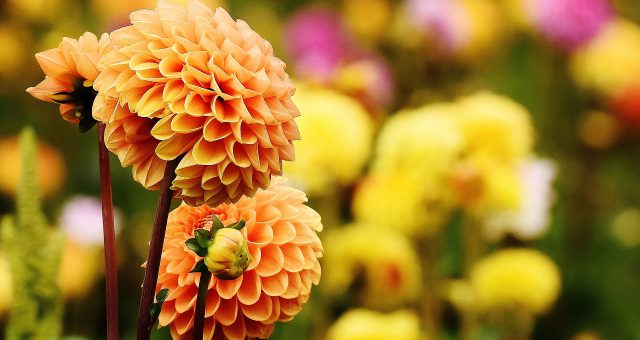
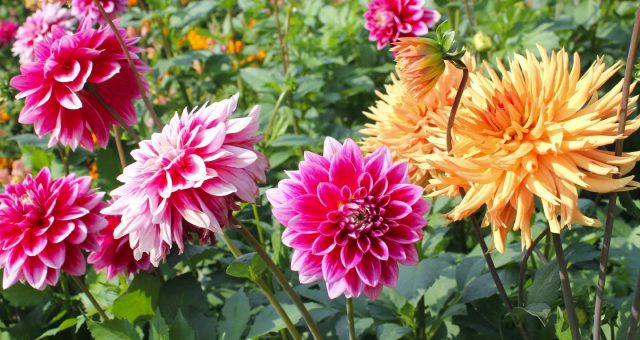
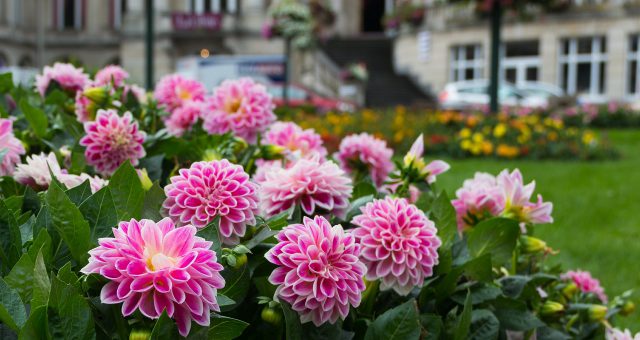
| Today, there are cultivars in the form of the waterlily, the paeony, the orchid, the chrysanthemum and the anemone, to say
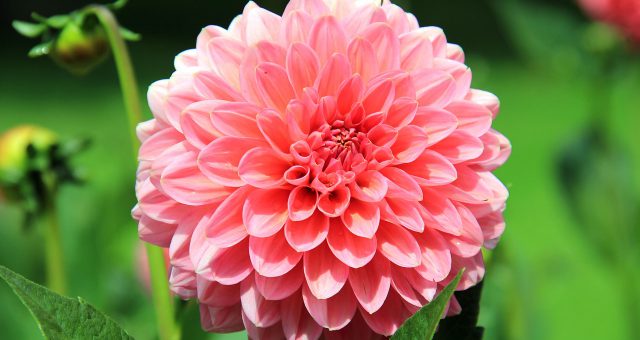
nothing of the main formations like the decorative (flat, broad petals), the cactus and semi-cactus types (rolled, pointed petals) and the ball forms
(globular flowers) that have as their smallest relative the popular Pompon Dahlias that beguile so many gardeners. |
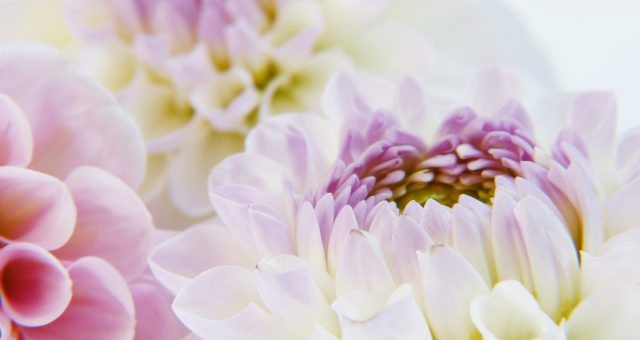
| There is every colour and colour combination to choose from, except the elusive blue (which we are still seeking) which is
covered by the wide range of violet and mauve cultivars. Sizes range from the smallest types, called Topmix or Lilliput Dahlias to the giants that have blooms
over a foot in diameter carried on powerful stems. |
| Today's hybridisers are still seeking the true blue dahlia, as well as one with a scent, and one that is frost hardy. |
| |
| Return to Top of Page |